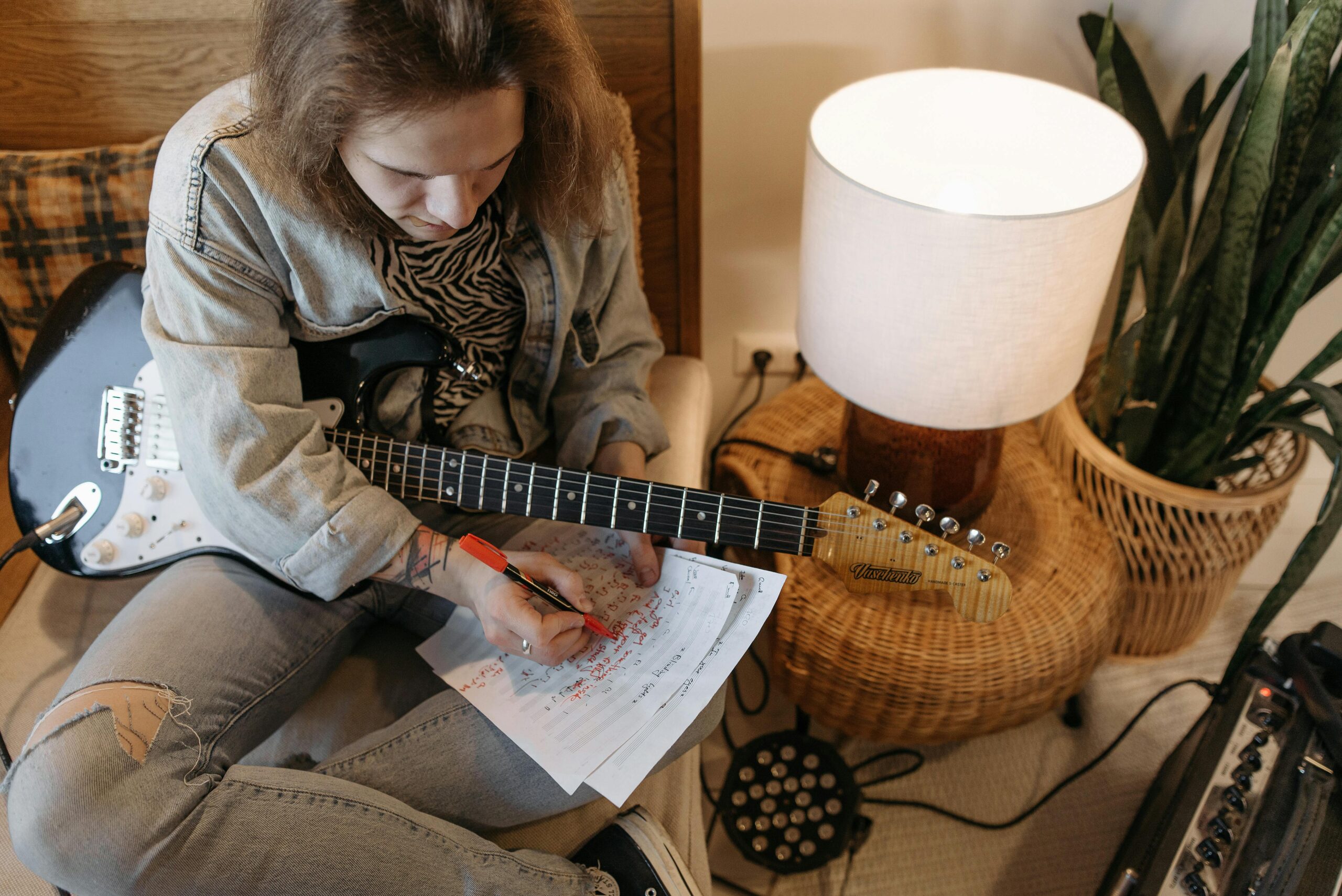
It always starts the same way. You’re in the shower, minding your business, when your mouth betrays you. “All the single ladies.” Out loud. On autopilot. You roll your eyes. You hum anyway. Too late. The song owns you now.
That’s the trick. Songwriting isn’t communication. It’s manipulation. The right mix of rhythm, rhyme, and repetition, and your brain waves the white flag. Meaning optional. Groove mandatory.
When Words Start Dancing
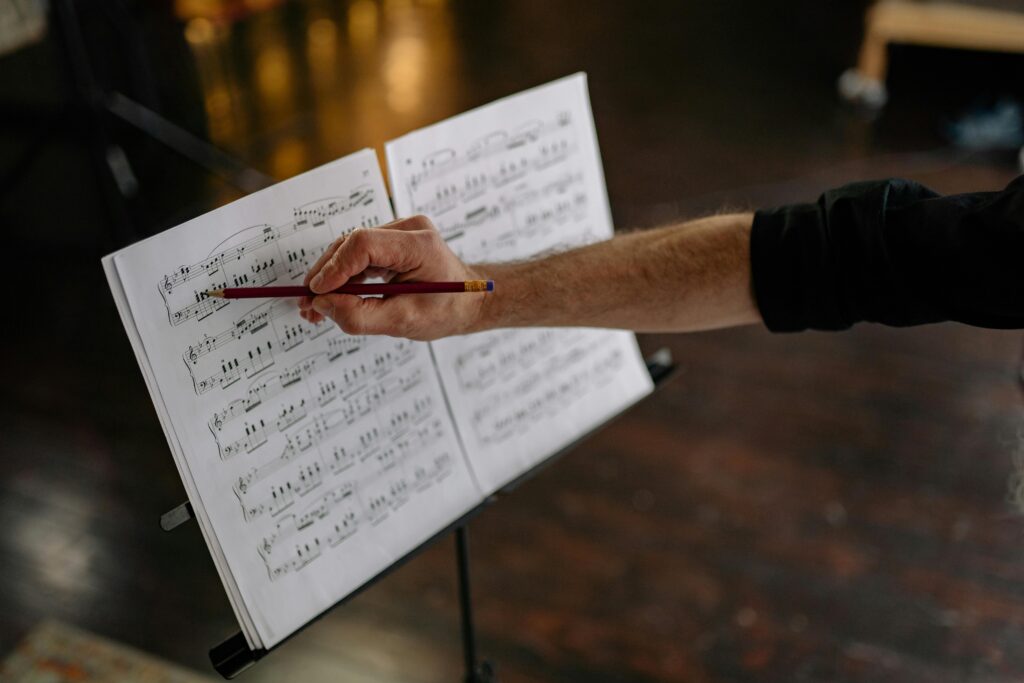
Lyrics don’t care about grammar. They care about movement. Stevie Wonder’s Superstition works because every syllable struts. The words swing with the beat. They don’t describe funk—they are funk.
Bob Dylan understood that too. Subterranean Homesick Blues reads like chaos on paper. Out loud, it’s lightning. Every rhyme tumbles into the next, fast and messy but perfect in rhythm.
Kendrick Lamar does it with precision. Each word in DNA. hits like a drum hit. You stop thinking. You start nodding. The song moves first, meaning follows behind.
Language doesn’t explain in music. It performs.
Rhyme: The Brain’s Favorite Magic Trick
Rhyme isn’t decoration. It’s bait. Your brain hears “love” and starts begging for “above.” When it lands, dopamine hits. Congratulations, you’ve been tricked into enjoying predictability.
Taylor Swift builds songs around that instinct. Every rhyme lands exactly when your neurons expect it to. You feel clever. She feels richer. Everyone wins.
Then there are the rule-breakers. Frank Ocean, Joni Mitchell, Bowie. They build a rhyme, then drop it on purpose. The brain fumbles and listens harder. The absence becomes tension. It’s lyrical teasing. And it works.
Repetition: Pop’s Favorite Hypnosis
Repetition is where songs sink their hooks in. Say a word once, it’s a lyric. Say it ten times, it’s gospel.
Hey Jude turns “na-na-na” into a spiritual experience. There’s no new meaning, just more of the same. And somehow it feels profound.
Rihanna’s Work barely uses words at all. “Work work work work work.” Half gibberish, fully addictive. The repetition melts sound into rhythm. You stop caring what it means because it already feels good.
Repetition tells the brain, “You know this.” The brain likes knowing things. It relaxes. It obeys.
Nonsense That Feels Profound
Some lyrics sound deep because they sound right. “Hallelujah” stretches open vowels like sunlight. “Hit me baby one more time” pops with consonants that slap. The sound carries emotion before meaning even shows up.
That’s why Smells Like Teen Spirit still works. Nobody knows what Kurt Cobain is saying, including Kurt Cobain. But the noise, phrasing, and delivery nail the feeling. Confusion with rhythm is better than clarity without it.
Songs don’t need to make sense. They just need to sound inevitable.
The Myth of Effortless Genius
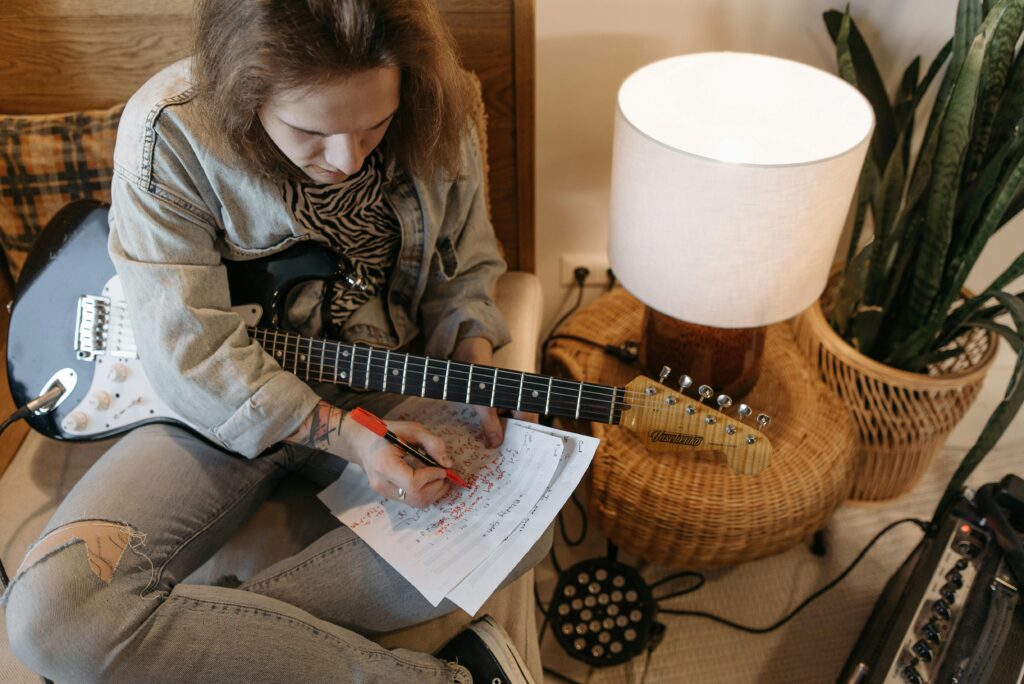
Every “simple” lyric is built on suffering. Songwriters spend hours shifting syllables, trimming vowels, and reordering lines until everything lands perfectly by accident.
One breath too early, and the rhythm breaks. One extra word, and the line dies. It’s not inspiration—it’s surgery. But the best songs never show the stitches.
A great lyric doesn’t want to be noticed. It wants to disappear into the bloodstream. It wants you humming it while you shop for cereal, swearing you hate it.
That’s the secret language of songwriting. It whispers instead of speaks. It moves instead of explains. You think you’re just singing along, but the song already rewired you.